Fewer routine questions
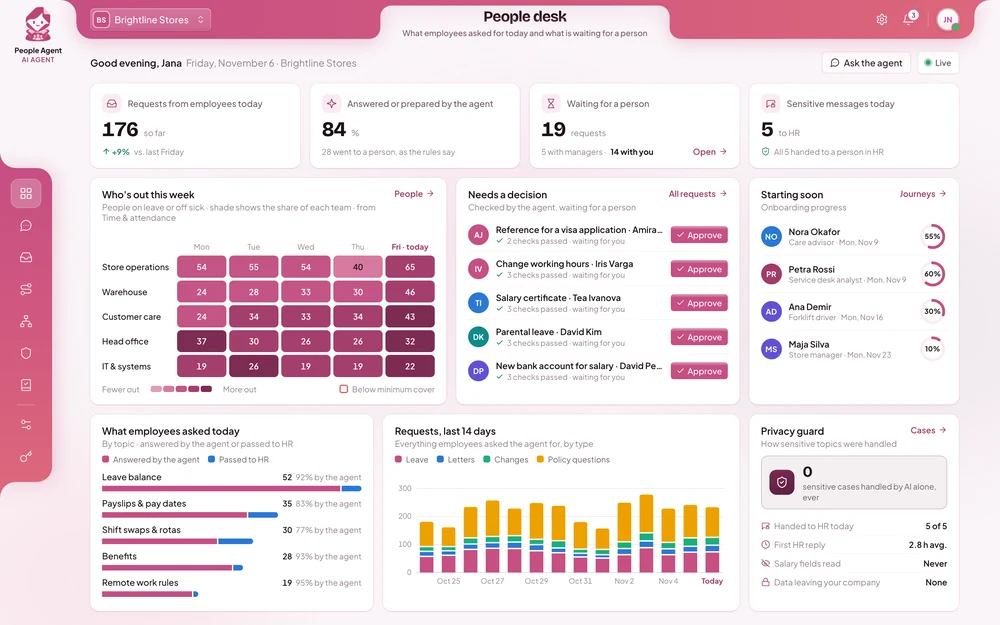
Leave balances, pay dates and policy questions are answered in private from your HR records and handbook, so HR stops answering the same things all day.
 People AI Agent
 answers employees’ HR questions from your own records and policies, and runs onboarding, offboarding and leave requests across HR, IT and managers. Your HR team handles half the routine requests it used to, and every decision about people stays with a person.
−50%
routine requests to HR
Day 1
accounts and equipment ready for new joiners
24/7
answers for every employee
Leave balances, pay dates and policy questions are answered in private from your HR records and handbook, so HR stops answering the same things all day.
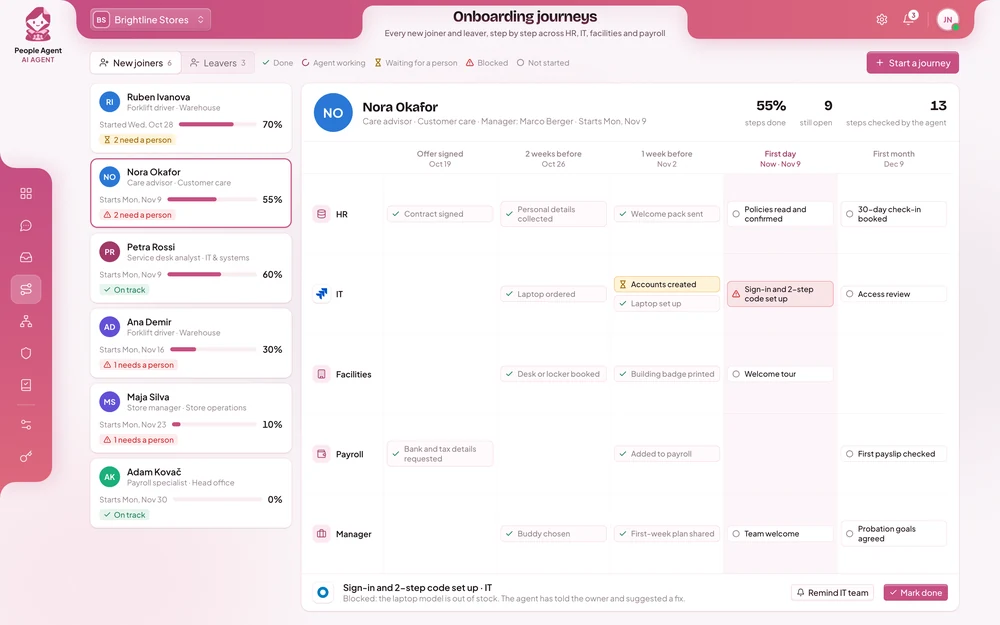
Contracts, accounts, equipment and first-week plans are coordinated with IT, facilities and managers, and leavers are handled with the same care.
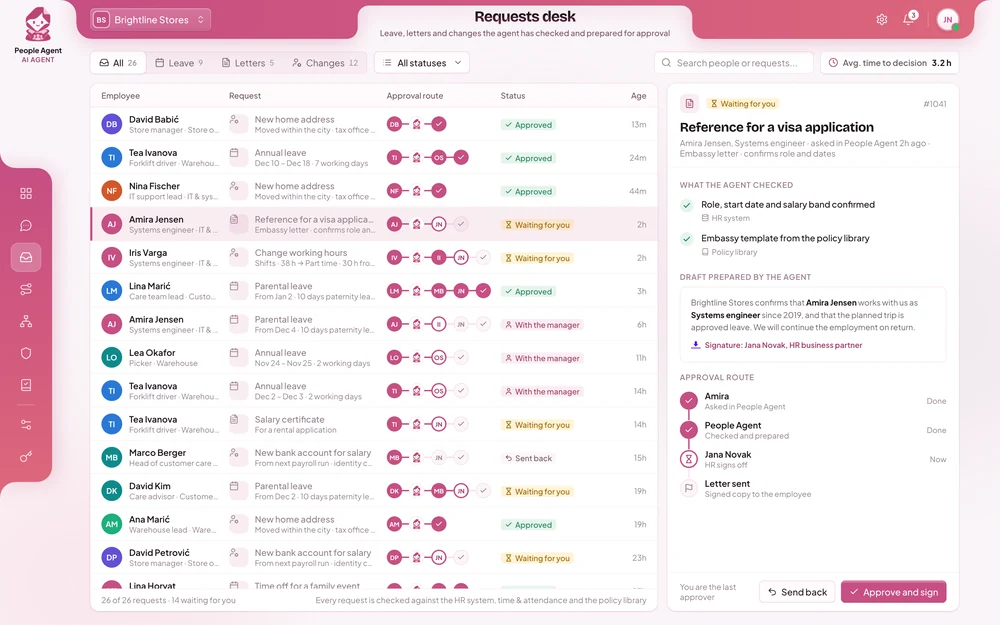
Leave and change requests arrive checked against balances and team calendars, so managers approve in one step and still make every decision.
Interviews are scheduled, reminders sent and feedback collected, so recruiters spend their time with candidates and hiring managers.
An employee asks one question. The agent checks the leave balance and company holidays, looks at the team calendar and sends the request to the manager. The manager makes the decision.
EmployeeHow many vacation days do I have left, and can I take 22–26 December?
People AgentYou have 9 days left this year. 22-26 December needs 3 days, because the 24th and 25th are company holidays. Your team calendar shows no conflicts, so I’ve sent the request to your manager.
Each one in short: the problem, the results, and how the agent handles the work.
Store managers were the switchboard for everything: who can swap a shift, who covers a sick colleague, how many leave days someone has left.
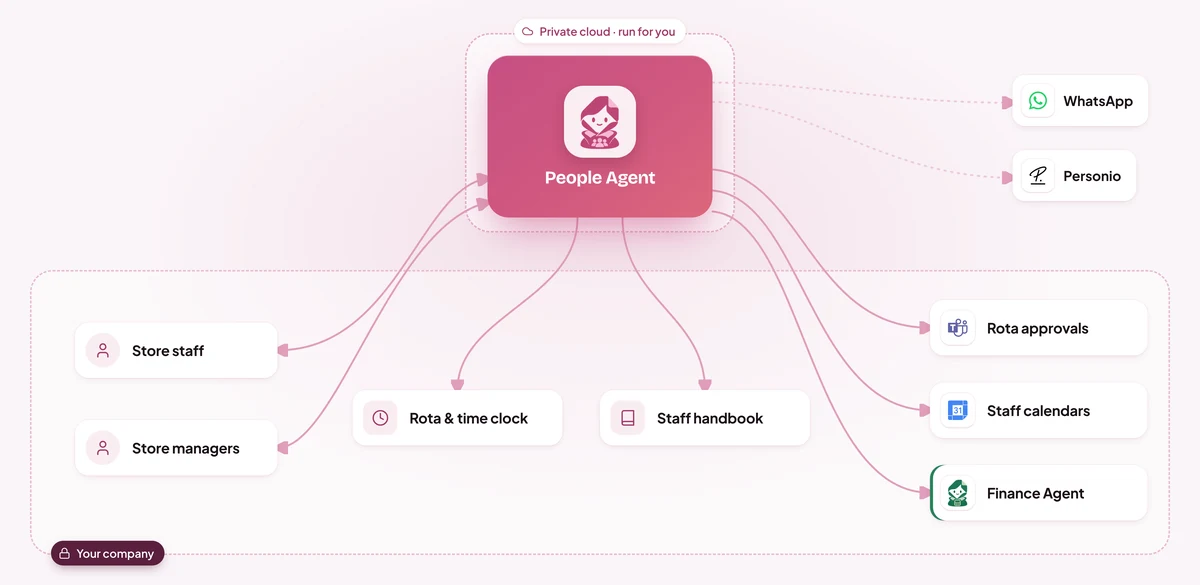
An employee messages "can I swap Saturday with Lea?" or "I'm sick today".
It checks hours limits, rest time between shifts, leave balances and how many people are already off.
For a swap it confirms with the colleague.
The manager approves with one click in Teams.
Ward managers tracked certificate expiry dates in spreadsheets and chased their teams by email.
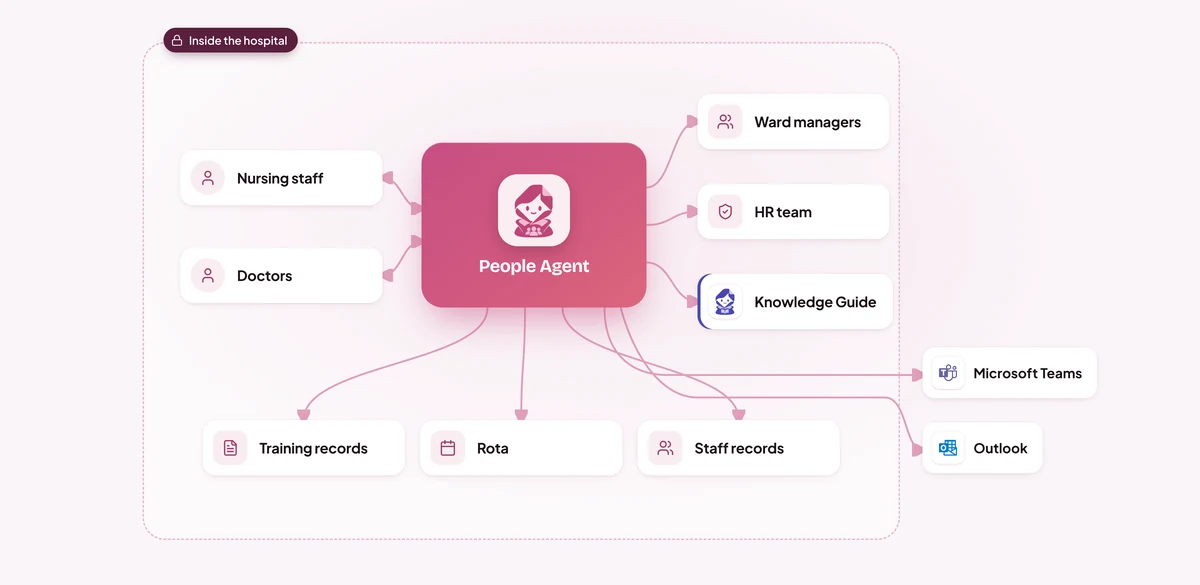
Every night the agent compares certificate expiry dates in the training records with each person's role and ward.
It checks the rota and offers course dates that fall on the person's days off, so no shift is lost.
When the employee agrees in Teams, the agent books the place, adds it to their Outlook calendar and updates the training record after they pass.
If no date fits, the ward manager gets one message with the options.
Booking an interview loop meant matching four interviewers' calendars by hand.
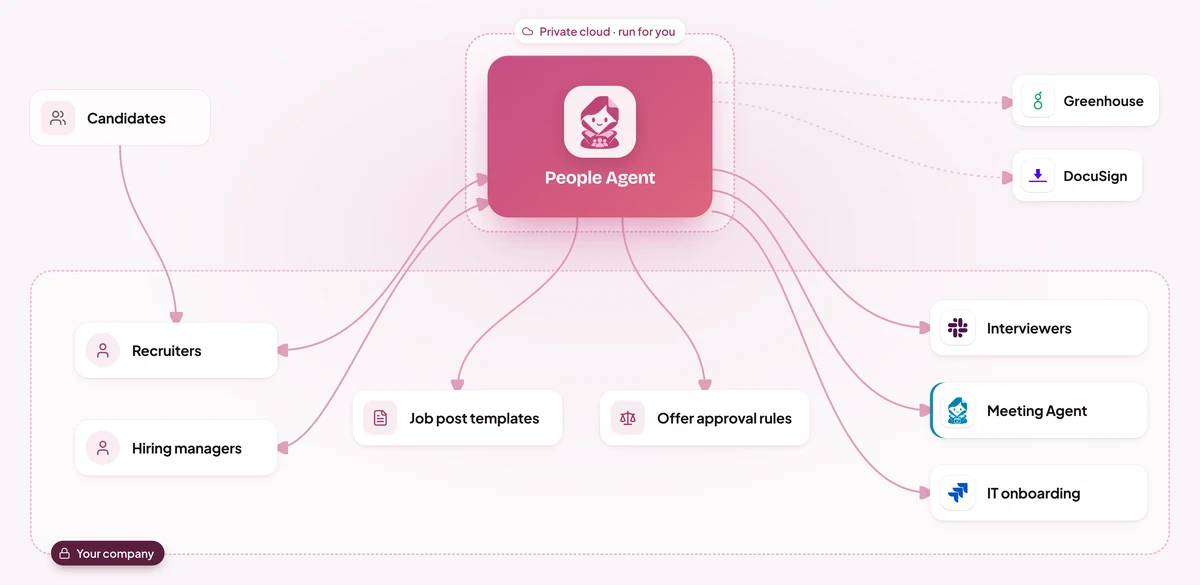
When a role is approved, the agent posts it on LinkedIn and Indeed from the approved template and tells the hiring manager.
It finds a slot that works for every interviewer in Google Calendar and sends one invitation to the candidate, with the agenda.
Interviewers get a short Slack reminder until feedback is in Greenhouse.
The contract goes out in DocuSign.
Onboarding lived in a paper checklist that travelled between HR, the stores, IT and the shift lead.
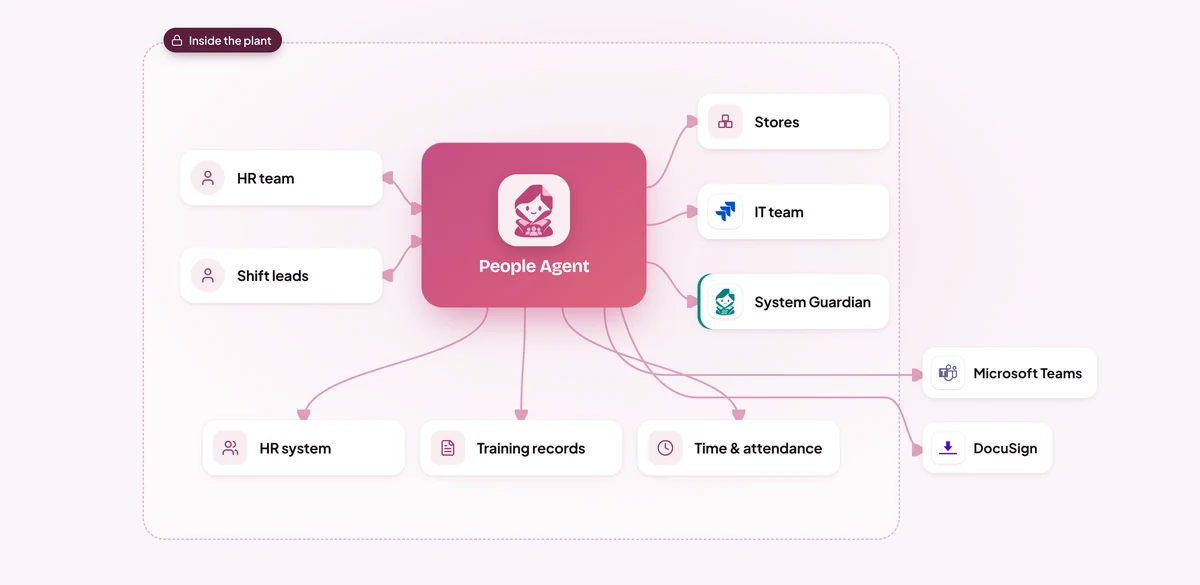
When a contract is signed, the agent creates the joiner's stations from the template for their role and shift.
It tells each team when it's their turn, books the safety induction, and checks the result in training records before the next step.
The shift lead gets one message in Teams with the joiner's start time, buddy and what's still open.
For leavers it collects handover notes, books the return of equipment, prepares final pay and switches off badge and accounts at the end of the last shift.
Letters were copied from old Word files, so wording drifted and details were sometimes wrong.
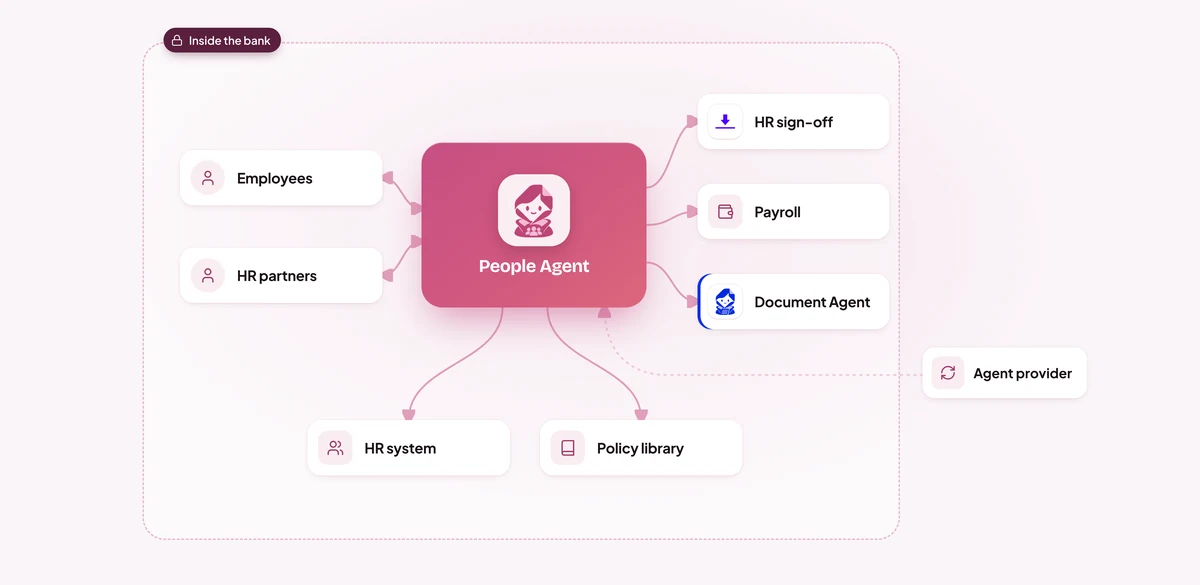
The employee asks in Teams.
It picks the right template and fills in name, role, start date and contract type from the HR system.
Salary lines stay empty for the agent.
An HR partner reviews and signs in DocuSign.
Each spring, two HR people sent out 180 contracts, collected documents and answered the same questions again and again.
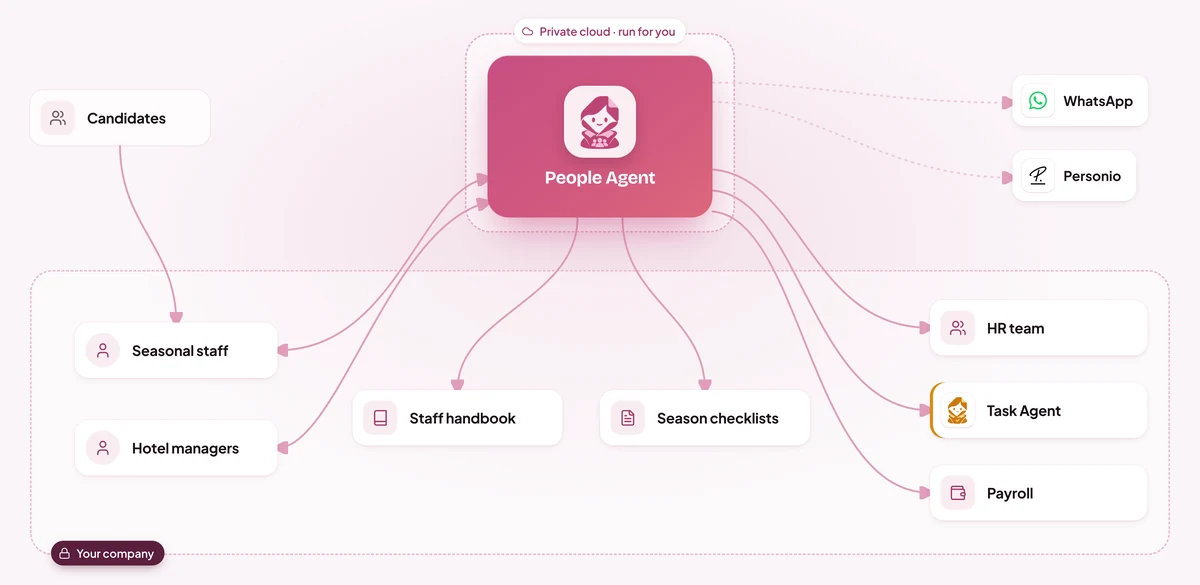
Approved seasonal roles are posted on Indeed in four languages.
Each joiner gets a day-one pack on WhatsApp: start time, uniform pick-up, locker number, first rota and the house rules, in their language.
Questions about shifts, tip pooling, days off and staff housing are answered from the handbook, any hour.
Leaving dates are agreed with each hotel manager, final pay and unused leave go to payroll, a reference is prepared, and everyone is asked about next year.
Illustrative scenarios with unnamed companies. The figures show the kind of improvement each setup is designed to deliver; actual results depend on volume, the systems connected and how the agent is configured.
We set up the People AI Agent around how your HR team and managers work today.
Week 1
We sit with the people who do the work, map the process step by step and find the systems that hold the information. You get a written plan before anything is built.
Weeks 2 to 3
We build and configure the agent around your process: your rules, your approvals, your wording, and connections to your databases and the tools your teams use.
Weeks 3 to 4
We install it inside your infrastructure, or in our cloud if you prefer, and test it with your team on real requests until the results meet the standard you set.
From week 5
We train your employees and administrators, hand over the controls and stay with you: monthly reviews, updates you approve, and the next process when you are ready.
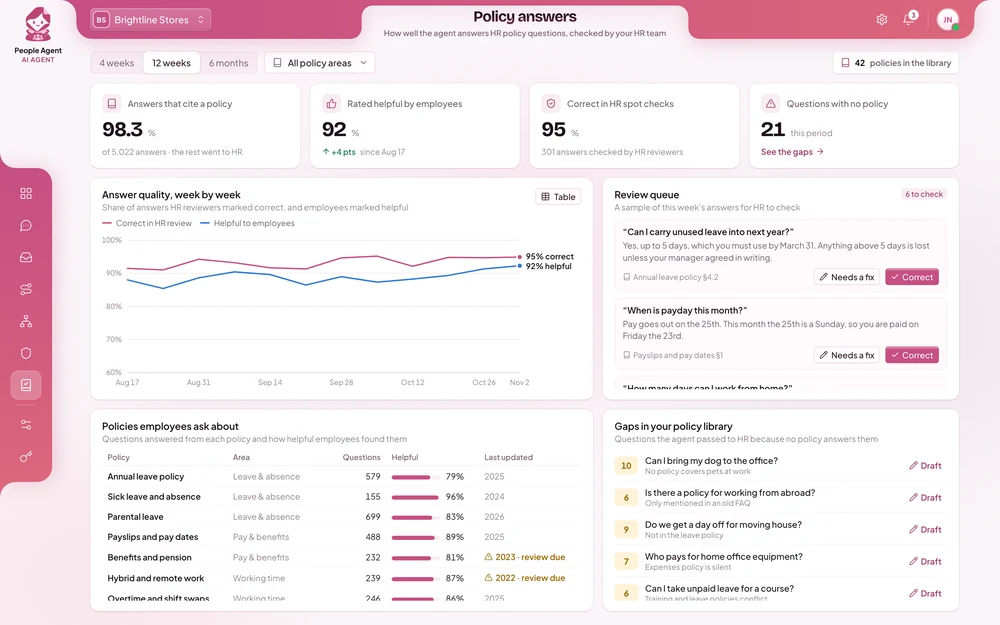
Employees ask real questions within the first weeks. Most companies see fewer routine requests to HR, and smoother onboarding, during the first month after going live.
It depends on the number of employees, the systems it connects to and where it runs. After a first conversation you get a written proposal with the price, so you can compare it with what routine HR work costs you today.
No. It takes over routine questions and coordination, so HR spends its time with the people who need a person. Decisions on leave, pay, hiring and every sensitive case stay with your people.
It answers only from your HR records and policies, shows the policy it used and passes anything it is unsure about to HR. Every answer and action is recorded, so you can review and correct it.
Yes. You decide which questions it answers alone, which requests it prepares and who approves them. Leave, letters and changes always wait for a manager or HR. You can pause it at any time.
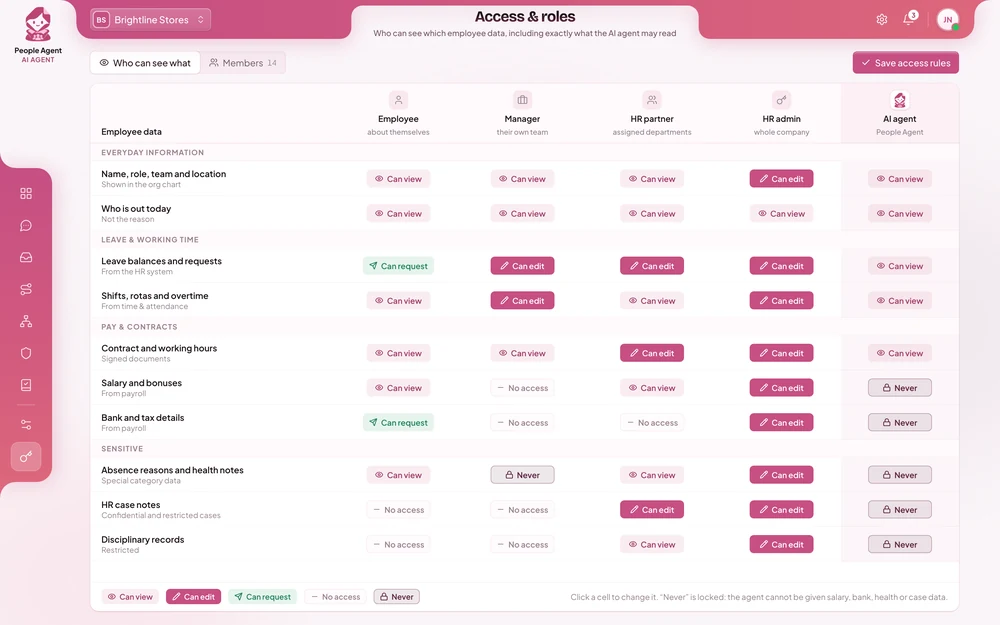
Each employee only sees their own records, and you decide what the agent may read, so salary, health and case notes can be closed to it entirely. It can run on your own servers, together with its AI models, so nothing leaves your company and we have no access.
No. It works with Personio, Greenhouse and your own HR and payroll systems, and employees ask in Microsoft Teams, Slack or WhatsApp.
The agent recognises topics such as complaints, health or conflicts at work, does not answer them, and opens a private case for a person in HR. It cannot read those cases.
One person from HR who knows your processes, access to test versions of the HR systems involved, and a few hours a week from HR and a few managers while we test.
Yes. Most companies start with one process, such as leave requests or HR questions, see the results, and then add onboarding, letters or hiring.
Tell us how many employees you have, which requests reach HR most often and how onboarding works today. You get a written proposal with the expected results, the setup, a timeline and a price.